Concrete Sidewalk Building in Eastvale CA - An Even Walk With Grip Underfoot
Cracked, heaved or sinking walk tripping people up? We dig out the soft ground, pack the base and pour a walk with real grip.
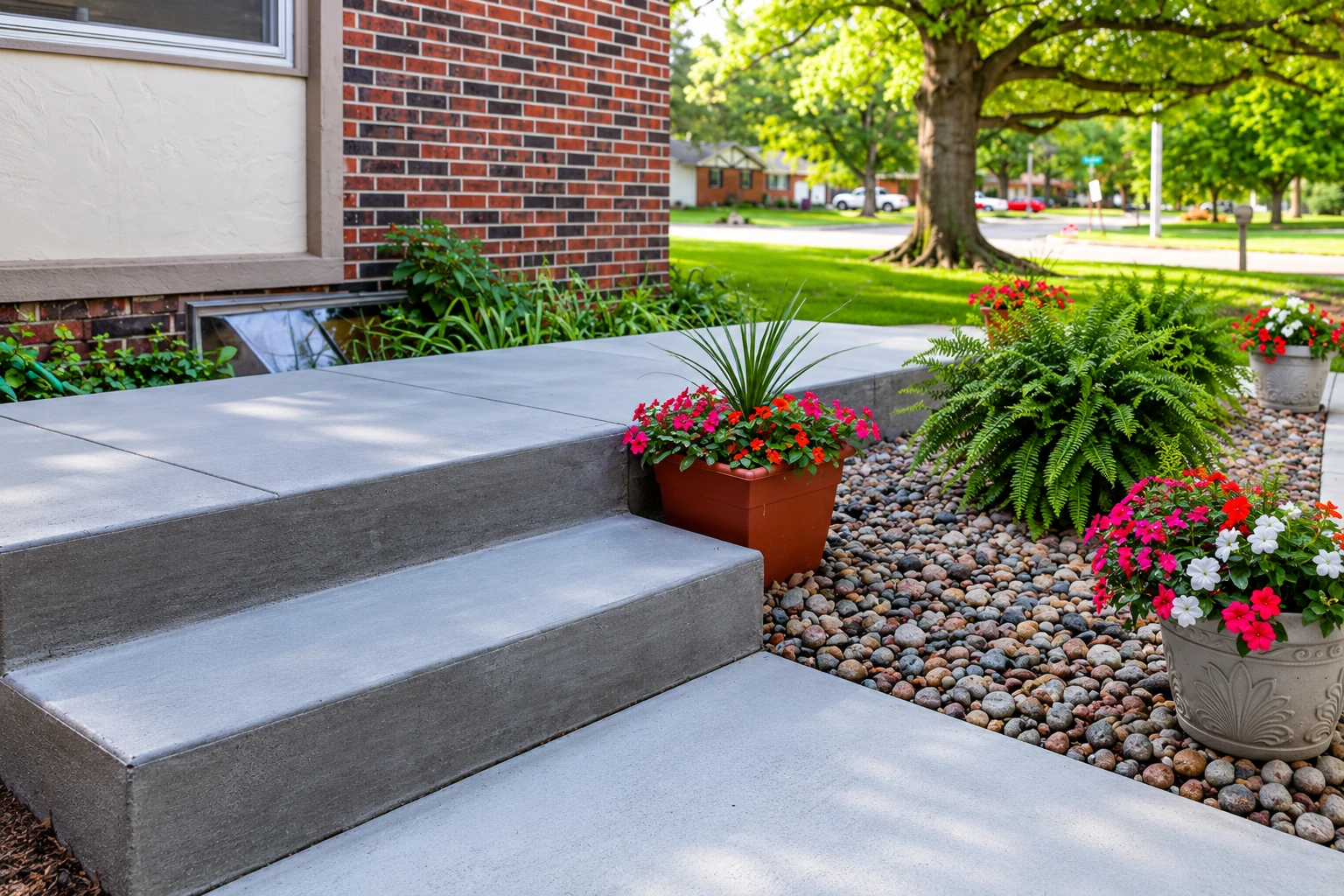
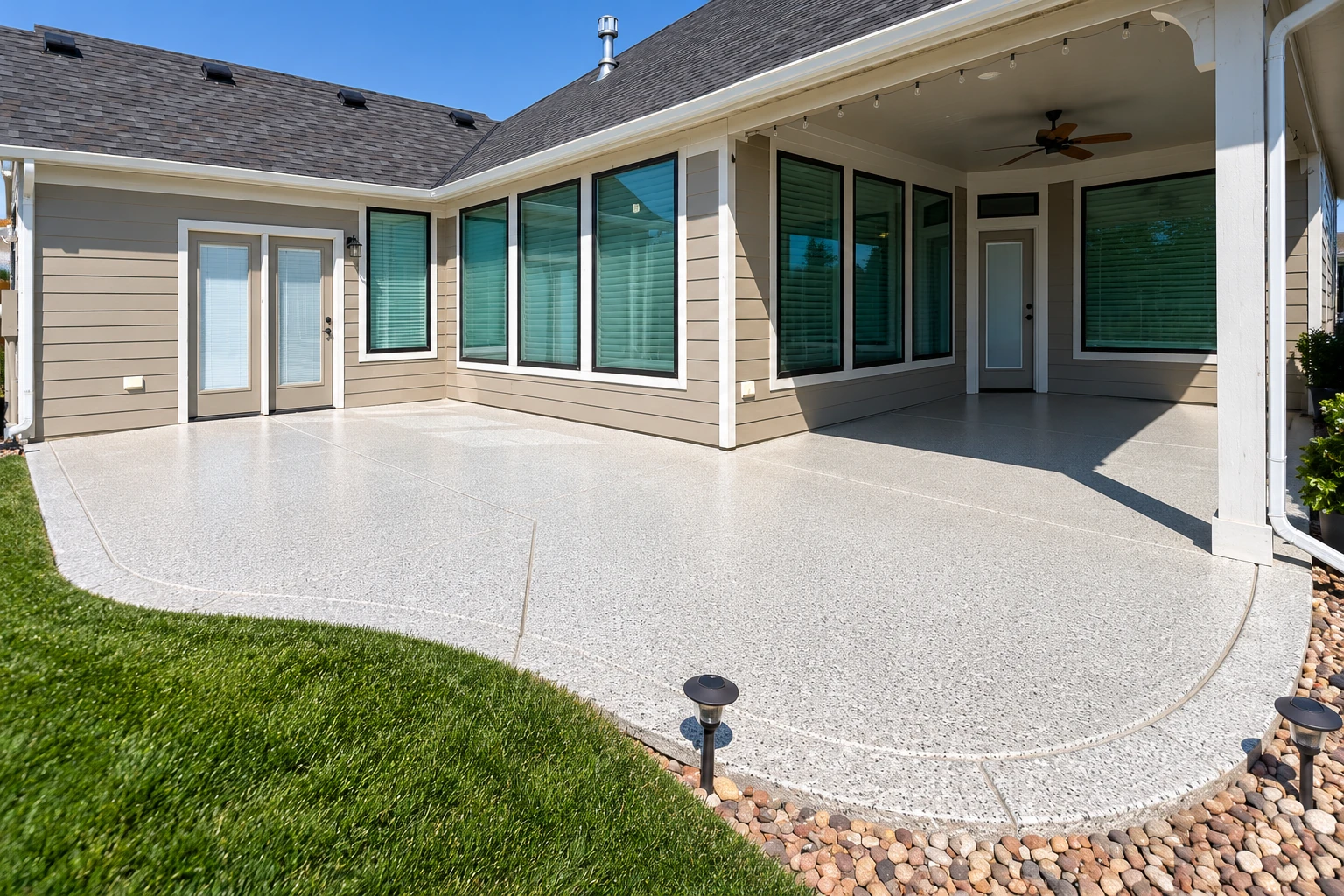
Concrete sidewalk building is groundwork first. The pour is quick.
Concrete sidewalk building in Eastvale is mostly groundwork. We dig out the topsoil and anything organic, pack the ground firm and pour on top of that, so you get a hard, durable path from the driveway to the front door, the side gate or the backyard.
Most calls start with something you can see. A panel that heaved over a root, one that sank where water pools, an edge that catches toes, or a dirt path worn across the lawn because nobody ever poured a walk there. Every one of those gets walked on daily, usually in the dark at some point.
Price mostly follows the walk's size, how much digging the ground needs, whether an old walk comes out first and whether a driveway crosses it. The schedule turns on the weather, any permit and the curing days afterward. You'll see where yours lands in the written estimate.
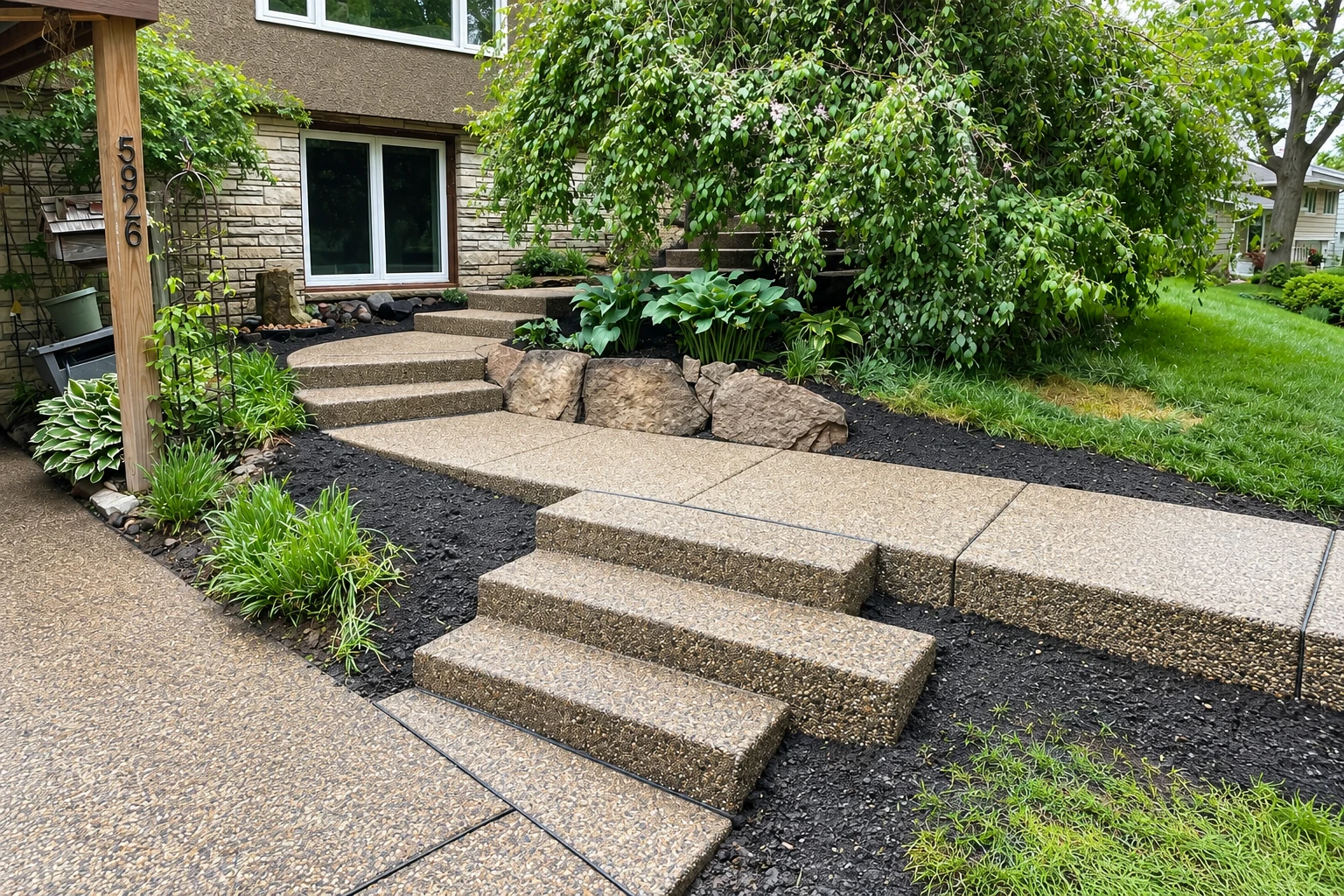
We pick the route first. Then we build the sidewalk.
Most of the bad walks I fixed for a property management company failed underneath, not on top. So before we settle on a route, I look at the trees nearby, where their roots are headed and where the water goes, and then we clear out the soft stuff and pack the ground.
Our crew forms, pours and finishes, and I'm there on pour day. The top gets a broom finish, fine grooves dragged across it with a stiff broom, because smooth concrete and a wet morning is how people end up on the ground.
Sidewalk building has six parts. Most you'll never see.
Route around roots
We lay out the walk with you, steering clear of big tree roots and low spots, because where it runs can matter more than a stronger mix.
Digging out and packing
We strip the topsoil and roots, then pack the subgrade, the ground the walk sits on, so it doesn't settle away from the concrete later.
Slope for runoff
We give the walk a slight fall so rain runs off into the yard, with no low spots that puddle or send water toward your house.
Driveway crossings
Where cars cross the walk, that section usually goes in thicker, with rebar, steel bars that hold the concrete together under a tire's weight.
Control joints
We cut control joints, shallow grooves across the walk, so when it cracks it cracks along a line we chose instead of across a panel.
Curing
Once it's finished, we keep the new walk damp while it cures, the slow stretch where it gains strength, instead of letting the sun bake it.
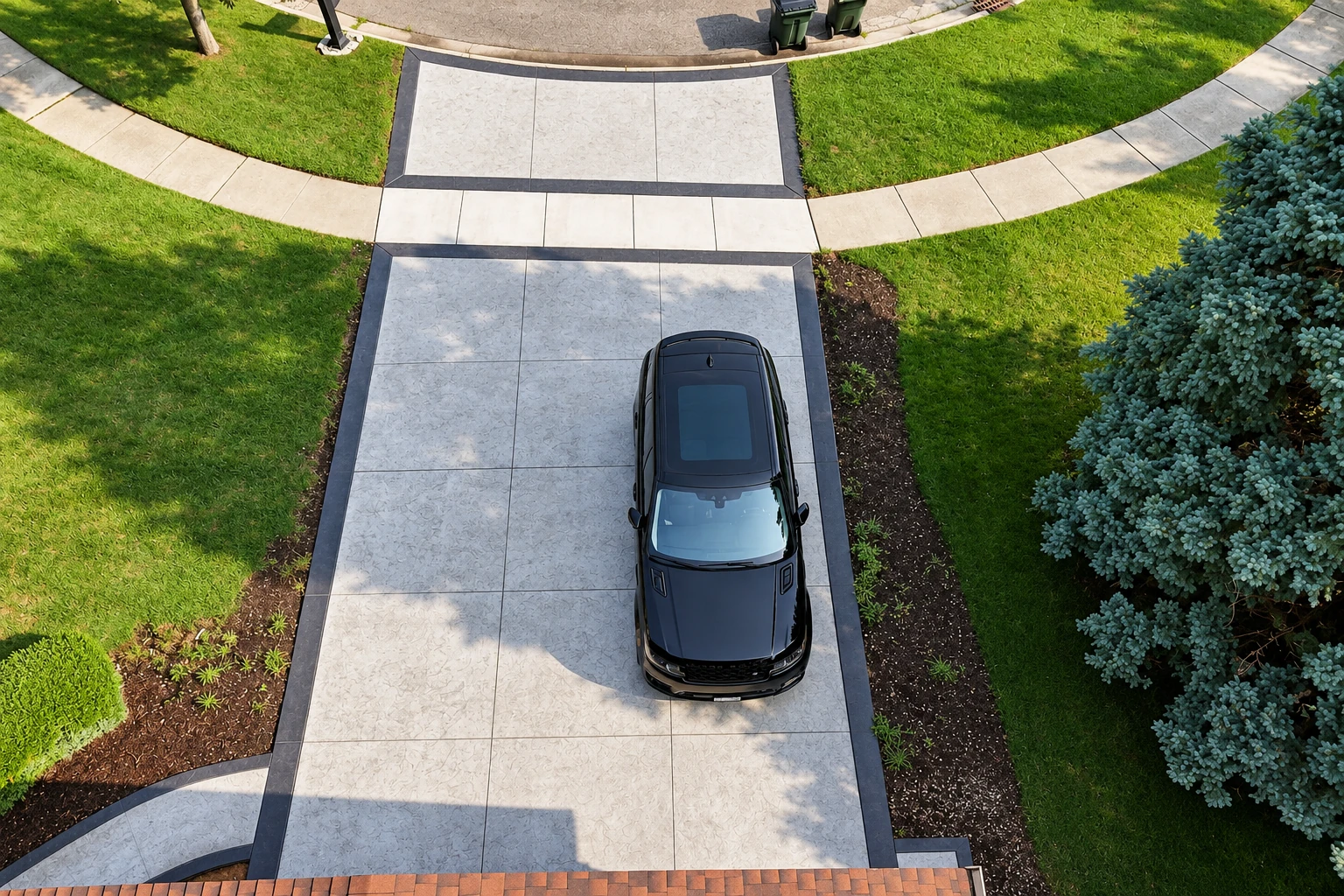
Sidewalks and slabs built right last. Patch jobs don't.
A walk on a base that was only raked flat settles with the dirt, one panel drops while the next stays put, and now there's a ridge someone trips on. Skip the joints and it cracks wherever it likes. Pour it at midday in summer and the top can dry ahead of the rest and turn weak and dusty.
When budgets get tight, the base is the first thing people want to cut, because nobody sees it on day one. I'd rather skip the fancy finish. A plain walk on packed ground outlasts a pretty one on loose dirt, and the same goes for decorative concrete or garage floor concrete.
Here's how it goes. Four steps, call to walk-through.
Call or send the form
Call (951) 416-3327 or send the form with your address and a rough idea of where you want the walk to go.
I come out and look
I walk the route with you, check the trees and where the water runs, and ask what the walk has to carry, just feet or car tires too.
Your price in writing
I measure and put the price in writing, along with the route we talked about and what the base work involves.
Pour and walk-through
If it needs a permit, we pull it. Then our crew forms, pours and finishes, cleans up, and I walk the finished walk with you.
Tell us about your walk. We'll come take a look.
Send the walk's length, route, any driveway crossing and nearby trees. We reply within one business day to set up a free on-site estimate, with no pressure to book.
(951) 416-3327We're based in Eastvale. We pour walks all around it.
- Eastvale, CA
- Jurupa Valley, CA
- Corona, CA
- Ontario, CA
- Riverside, CA
- Rancho Cucamonga, CA
- Norco, CA
- Chino, CA
- Chino Hills, CA
- Upland, CA
- Home Gardens, CA
- Bloomington, CA
We're based in Eastvale and work across the cities around it, including Jurupa Valley and Corona. Don't see your city listed? Call and ask.
Mon–Sun: 7 AM–10 PM
Fair questions about sidewalks. Straight answers below.
Read through the answers below. If your question isn't covered, call (951) 416-3327 and I'll answer it straight.
How much does a new concrete sidewalk cost near Eastvale?
In nearby Riverside, a residential concrete sidewalk usually costs about $4.50 to $11 per square foot installed. Your own number depends mostly on the ground and the layout, which is why the estimate comes after a site visit.
How long does a concrete sidewalk last?
A properly built concrete sidewalk should last 20 to 30 years with little maintenance, by one construction guide's estimate, and that rests on careful work from the ground up. The sealant in its movement joints, the gaps that let it shift, may need replacing every so often.
Is it normal for a new concrete sidewalk to crack?
Yes, a little cracking is normal in any new concrete walk. A national guide on slab design says some cracking and curling, where edges lift a bit, happens on every project and doesn't necessarily mean bad work. Our control joints decide where most of it goes, and I'd rather tell you that before you sign than after.
How long does a new concrete sidewalk need to cure?
National curing guidance says curing should start as soon as finishing is done and last at least 3 days, keeping the concrete wet or sealed so it doesn't dry out. Plan on going easy on the new walk through that stretch, and I'll tell you when it's ready for regular use.
Who issues building permits in Eastvale?
The city's Building Safety Team issues permits for residential, commercial and city-owned public projects and checks them against California's building codes. Its permits desk is at 951.703.4450 or permits@eastvaleca.gov. We're licensed and insured, and if your walk needs a permit, we pull it and set up the inspections, or ask the city first when it's unclear.
The walk's just one piece. We pour the rest too.
- Concrete driveway building
- Concrete patio construction
- Stamped concrete services
- Garage floor concrete
- Decorative concrete
- Concrete retaining walls
- Concrete floor installation
- Concrete pool decks
- Concrete steps construction
- Slab foundation building
- Foundation installation
- Concrete parking lot building
- Concrete footings
- Foundation raising
- Concrete cutting
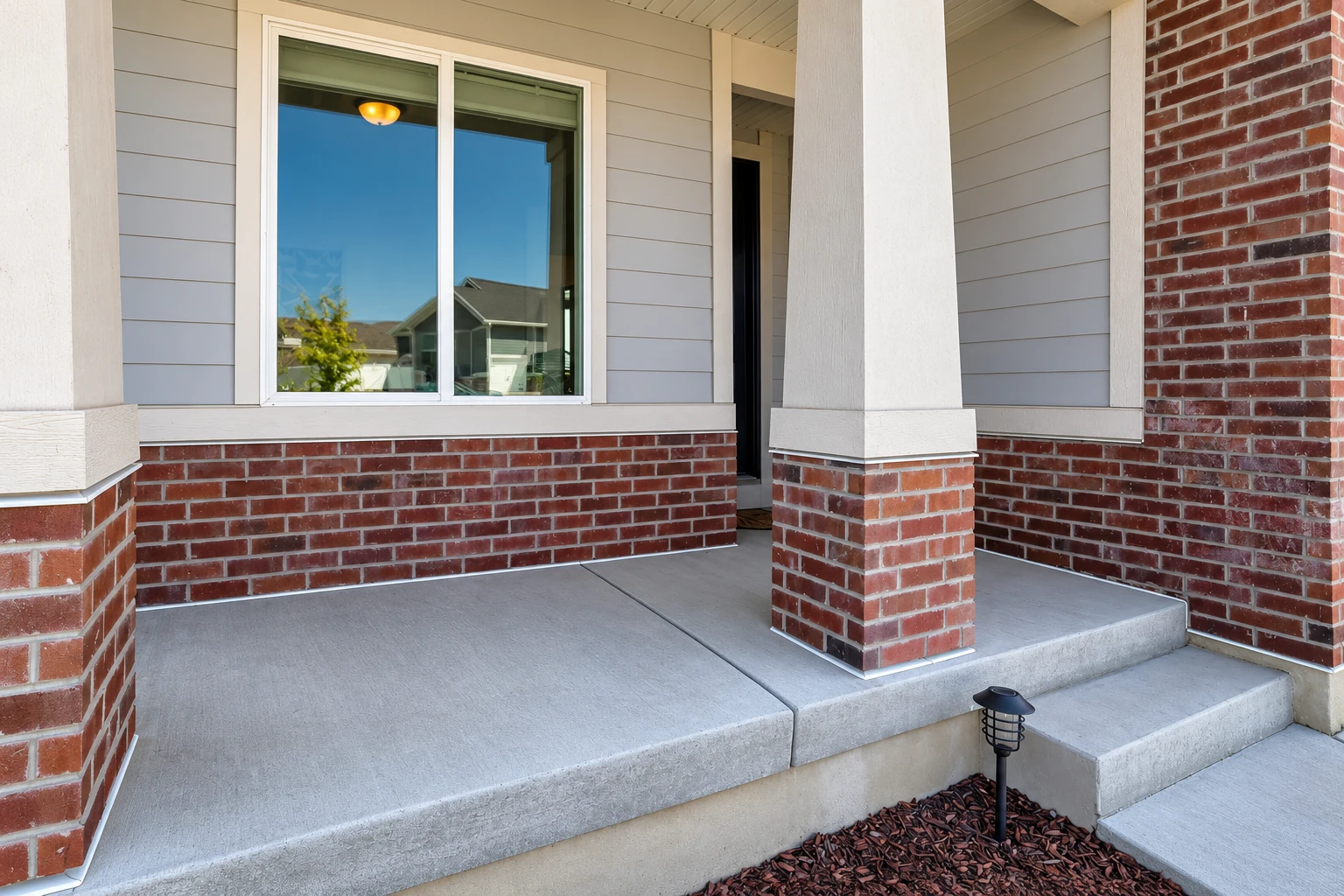
Need a new walk or slab? Call Superior Eastvale Concrete.
Call or send the form with where the walk should run, and we'll set a time to come look. Beats stepping over that ridge another season.
(951) 416-3327