Concrete Pool Decks in Eastvale CA - Built to Leave Your Pool Edge Alone
Cracked deck, sinking slabs or chipping where the deck meets the pool? We pour new decks, or resurface ones worth saving, with that edge protected.
Concrete pool decks look simple. The pool edge says otherwise.
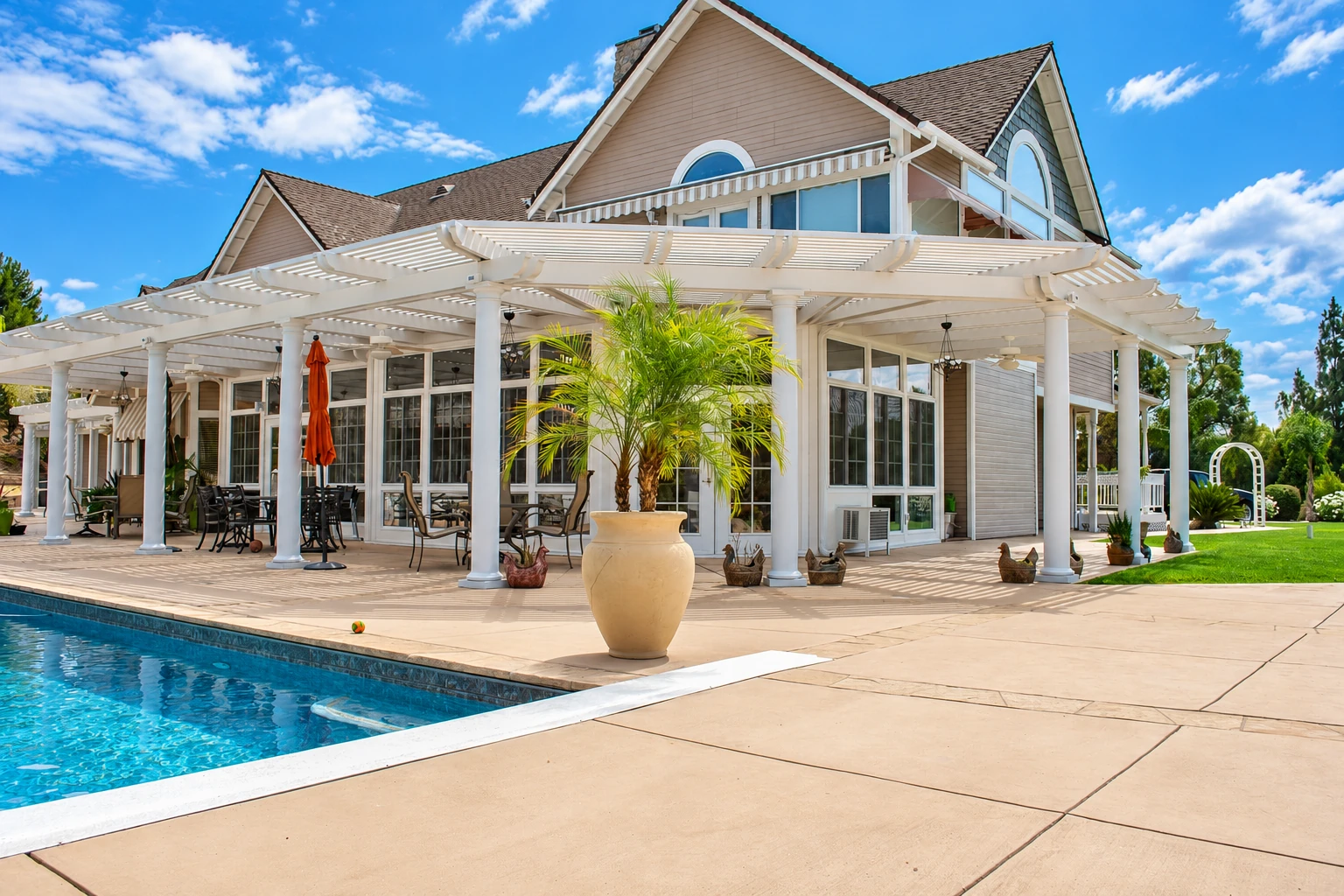
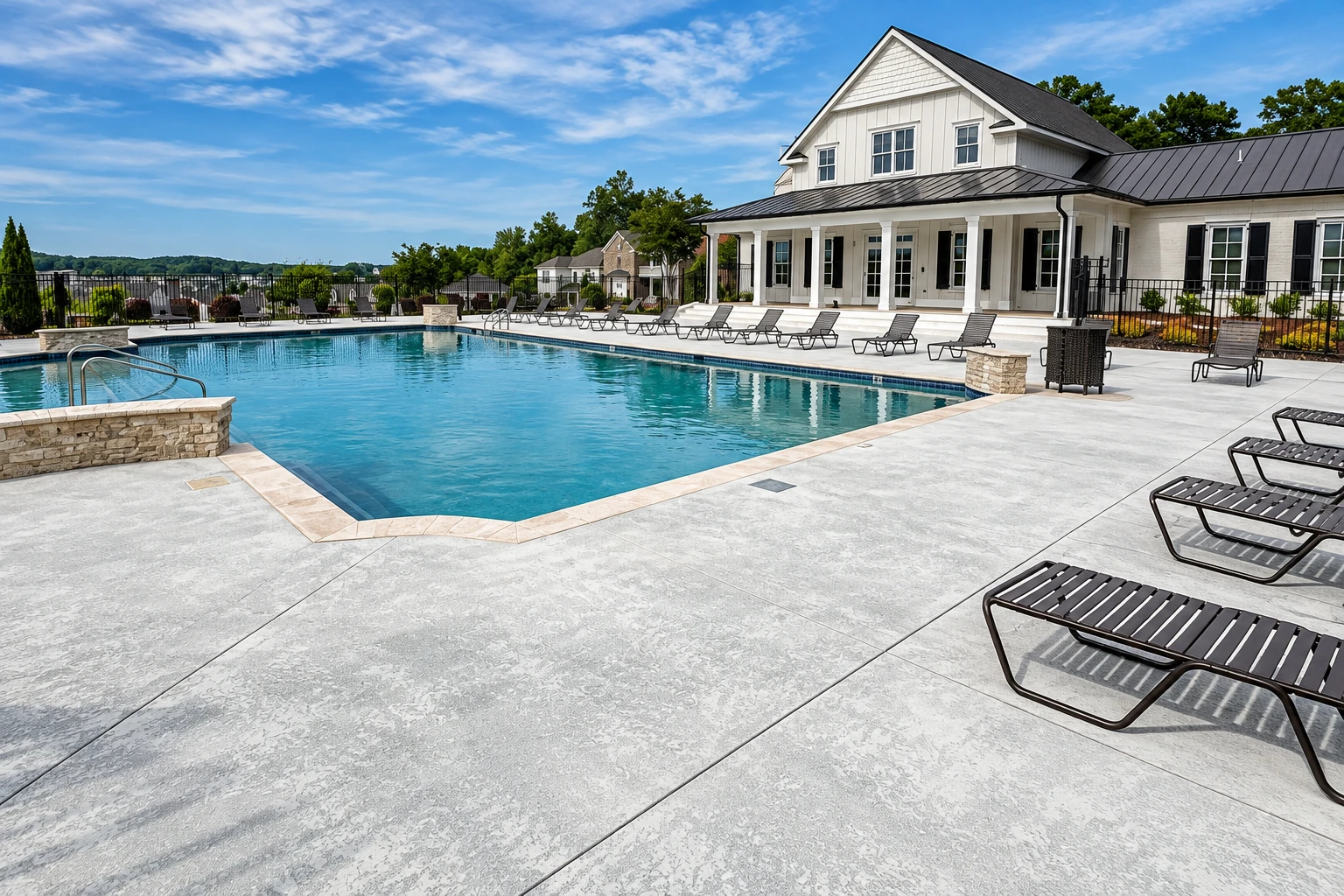
A concrete pool deck is the flat concrete we form, pour and finish around your pool in Eastvale, right up to the coping, the cap that runs along the pool's edge. It's flatwork, the same family as patios and walks, except this slab lives next to a big hole full of water.
Most calls start with cracks, slabs that sank or tipped, water pooling where people walk, or chipping right where the deck meets the pool. That last one is the one to worry about, because a deck that moves the wrong way can damage the pool's edge, and the pool is the expensive part.
The price comes down to size, the shape you're wrapping around, whether an old deck comes out first and the finish you pick. The schedule turns on any permit, the weather and curing, the wait while concrete hardens before it takes weight. I'll measure and put your price in writing when I come out.
Pool decks get planned from the edge. Then the base.
If you already have a deck, I look at it first and tell you honestly whether it's worth resurfacing or needs to come out. I spent years patching cracked slabs at rentals around here before I started this business, and I'd rather give you the bad news early than the bill later.
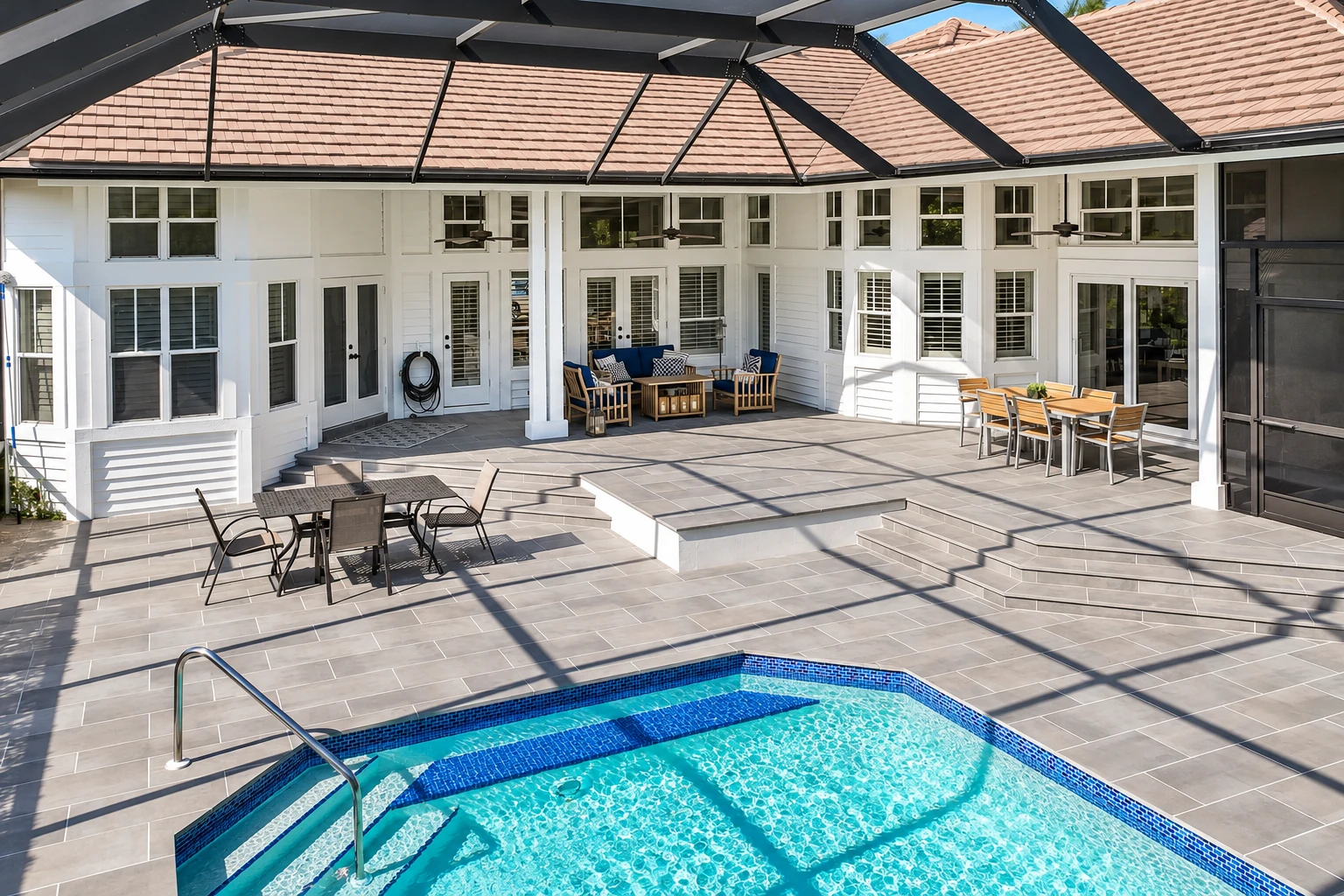
On a new deck, the part people forget is the joint where the deck meets the pool edge, so we leave a gap there and fill it with something that flexes. Underneath, we dig out and pack the subgrade, the ground the slab sits on, and set rebar, the steel that holds the slab together if it cracks.
Concrete pool decks take more than a pour. Here's what's covered.
Tear-out of old decks
If the old deck can't be saved, we break it out and haul it off, working carefully around the coping and the pool.
Base and steel
We dig out soft dirt, pack the base and set rebar, the same groundwork we'd give a slab foundation.
Control joints
We cut control joints, grooves that give the slab a planned place to crack, so the lines land where we chose and not across the middle.
Edge joint reseals
On decks worth keeping, we cut out cracked or loose caulk at the pool edge and reseal the joint so it can flex again.
Finish and color
Most decks get a broom finish, a light brushed texture for grip under wet feet, or a colored or stamped finish if you want more than plain gray.
Steps tied into the deck
We can pour concrete steps from the house or patio as part of the deck job, so heights and finishes line up.
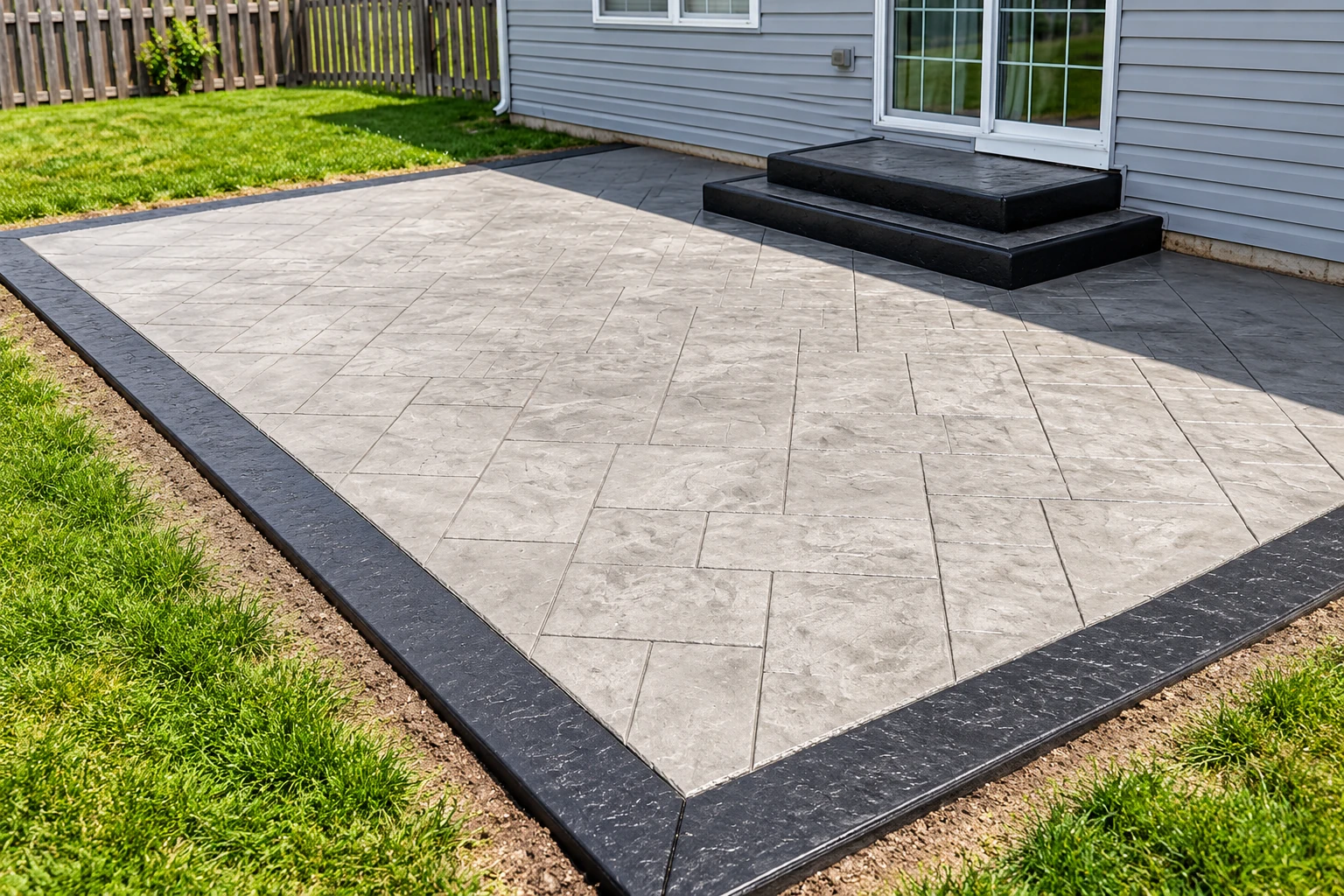
Pool decks and patios crack for reasons. Most start underneath.
Bad concrete usually looks fine the first summer. A base raked level instead of dug out and packed settles with the dirt. Skip the joints or cut them late, and the slab cracks wherever it likes. Pour in midday heat and the top turns weak and dusty.
When the budget gets tight, people want to cut the base and keep the nice finish. I'd go the other way, because a finish can be redone and a base can't without tearing out the deck. Concrete still cracks some, and I'd rather tell you that before you sign than explain it after.
Here's how it goes. You call, I visit, we pour.
Call or send a request
Call (951) 416-3327 or use the form and tell us what's going on, a new pool, a tired deck or chipping at the edge.
I come out and look
I come out, look over the site with you, ask what the deck has to carry and where the water ends up, and check any old deck first.
Price in writing
I measure and put the price in writing, and I'll tell you then whether your old deck is worth resurfacing or should come out.
Permit, pour and walk-through
If it needs a permit, we pull it with the city's Building Safety team. Our crew forms, pours, finishes and cleans up, then I walk it with you.
Tell us about your pool deck. We'll come take a look.
Send the deck's rough size, its age and photos of the pool edge. We reply within one business day to set up a free on-site estimate, with no pressure to book.
(951) 416-3327Based in Eastvale. Working across the cities around it.
- Eastvale, CA
- Jurupa Valley, CA
- Corona, CA
- Ontario, CA
- Riverside, CA
- Rancho Cucamonga, CA
- Norco, CA
- Chino, CA
- Chino Hills, CA
- Upland, CA
- Home Gardens, CA
- Bloomington, CA
We're based in Eastvale and pour pool decks in Corona, Norco and plenty of cities nearby. If your city isn't listed, call and ask, because the list isn't the whole map.
Mon–Sun: 7 AM–10 PM
Pool decks raise questions. Here are straight answers.
Read through the answers below. If your question isn't here, call (951) 416-3327 and ask me, because I'd rather explain it once on the phone.
What does a concrete pool deck cost around Eastvale?
An installed concrete slab in the Riverside area usually costs about $6 to $14 per square foot, and that's a typical range for the area, not my quote. Your own price comes after I measure and see what's coming out, and I put it in writing.
Can my old concrete pool deck be resurfaced instead of replaced?
It can, if the old concrete is a good candidate, because a resurfacing coat covers the cracks and bonds to the slab. A deck that has sunk, heaved or is breaking apart usually needs to come out, since a coating won't fix what's underneath. That's the first thing I check.
Why does a pool deck need a sealed gap at the pool edge?
Because a deck moves, and without a gap and flexible sealant it pushes on the coping and the pool's top wall, which can lead to cracks or spalling, the chipping and flaking you see at the edge. Ask what fills that joint, since sand or polymeric sand doesn't compress and passes the push straight to the coping.
How often should the joint around a pool deck be resealed?
Most flexible caulks last five to ten years, according to one joint maker's guide, so plan a reseal on that schedule and check the joint every year for cracks, pulling away or wear. On a newly poured deck, the same guide says to wait at least 30 days before caulking, so the concrete can cure and shrink.
Will a concrete pool deck get too hot to walk on?
It can in full sun, so ask how the color you pick changes the surface heat. One maker's cool-feel deck coating keeps the surface cooler than bare concrete, by an amount that depends on color, air temperature, time of day and sun. Coatings need redoing, and that maker says some get slippery when wet without a slip-resistant additive.
Who is allowed to pour a pool deck in California?
A licensed concrete contractor, since the state licensing board defines that license as forming, pouring, placing and finishing flat concrete work. A general building contractor can take it if they hold that license or hire someone who does, and so can a landscaping contractor when the deck is part of the landscaping. We're licensed and insured.
We pour more than pool decks. Here's the rest of it.
- Concrete driveway building
- Concrete patio construction
- Stamped concrete services
- Concrete sidewalk building
- Garage floor concrete
- Decorative concrete
- Concrete retaining walls
- Concrete floor installation
- Concrete steps construction
- Slab foundation building
- Foundation installation
- Concrete parking lot building
- Concrete footings
- Foundation raising
- Concrete cutting
Pool deck or patio cracking? Call for a free estimate.
We answer seven days a week until 10 PM, so call from the deck, tell us what you see, and we'll set a time to come look.
(951) 416-3327